Experience, technology and teamwork are key to enabling carbon-efficient production
By Eirik Enerstvedt, PLM Remedial and Abandonment Services with Odfjell Technology Ltd
Remedial and workover operations are crucial catalysts to maximising production across mature and redeveloped fields.
But meeting the shared goal of our low-carbon future will rely on optimising the global energy assets already in situ, rather than focusing solely on alternative technologies and newbuild infrastructure.
Ongoing production of oil and gas is after all critical to the necessary transition ahead – helping to meet global demand while keeping costs in check and ensuring workforce continuity.
Efficiency will play a huge role in those combined efforts and must be at front of mind on the road to net zero – across economics, deployment and operations. And nowhere is this more important than with existing wells on mature fields.
In remedial and workover operations, services like fishing, milling, casing exit, wellbore cleanup and tubular running services (TRS) are essential but often overlooked components in this landscape. They can extend the productive life in a safe, timely and cost-effective way while also avoiding the carbon associated with the new drilling that might otherwise be necessary. In this context, remedial and intervention activities enables Increased Oil Recovery (IOR).
This is the hands-on side of the energy transition, leveraging innovation and execution to deliver economic and environmental gains.
Routes to success
There are, of course, challenges. An increasing percentage of human and financial capital, as well as the supply chain, port infrastructure and research and development, is targeted at emerging low-carbon technologies – both within and outside of the traditional fossil fuel companies.
Digital applications, AI and machine learning meanwhile promise much and are integrating into industry solutions. But all too often, these are without a proven pedigree, occasionally developed without a clear plan for real-world applications, and sometimes even without a full understanding of what has been gained and what might have been lost.
But the opportunity is equally significant. Operators are committed to the production efficiencies, carbon reductions and financial returns associated with redevelopment, repurposing and asset maximisation.
Oilfield services, engineering and well intervention are at the forefront of this shift, bringing forward a mix of innovations and cost reductions that are enabling operators to boost production and reduce costs by addressing inefficiencies among existing infrastructure and streamlining the operations required to bring redeveloped assets online.
For multiple geographies, offshore and onshore, mature or emerging, this is providing options across a wider range of installations, including, but not limited to, sidetracks, slot recovery and plug and abandonment.
From a drilling and well construction perspective, interventions such as whipstocks, casing exits and slot recovery extend the original well design. They allow operators to adapt or change production profiles without the cost and carbon footprint of full greenfield drilling.
Sidetracks and re-entries can reduce drilling investment, improve access to bypassed reserves and redefine drilling efficiency across the full operational life of a well asset.
The right toolbox
Asset lifecycle management is increasingly shaping operational decision-making. Rather than treating intervention, redevelopment and abandonment as separate phases, operators are recognising how remedial choices influence long-term production, cost and emissions.
Effective remedial and intervention operations can extend field life, defer decommissioning and reduce the complexity of eventual abandonment.
Conversely, poor access or unresolved integrity issues can limit IOR options and accelerate decline. This is why remedials sit at the intersection of production optimisation, drilling efficiency and end-of-life planning. Well services and downhole technology are central to implementing the solutions required in this new era.
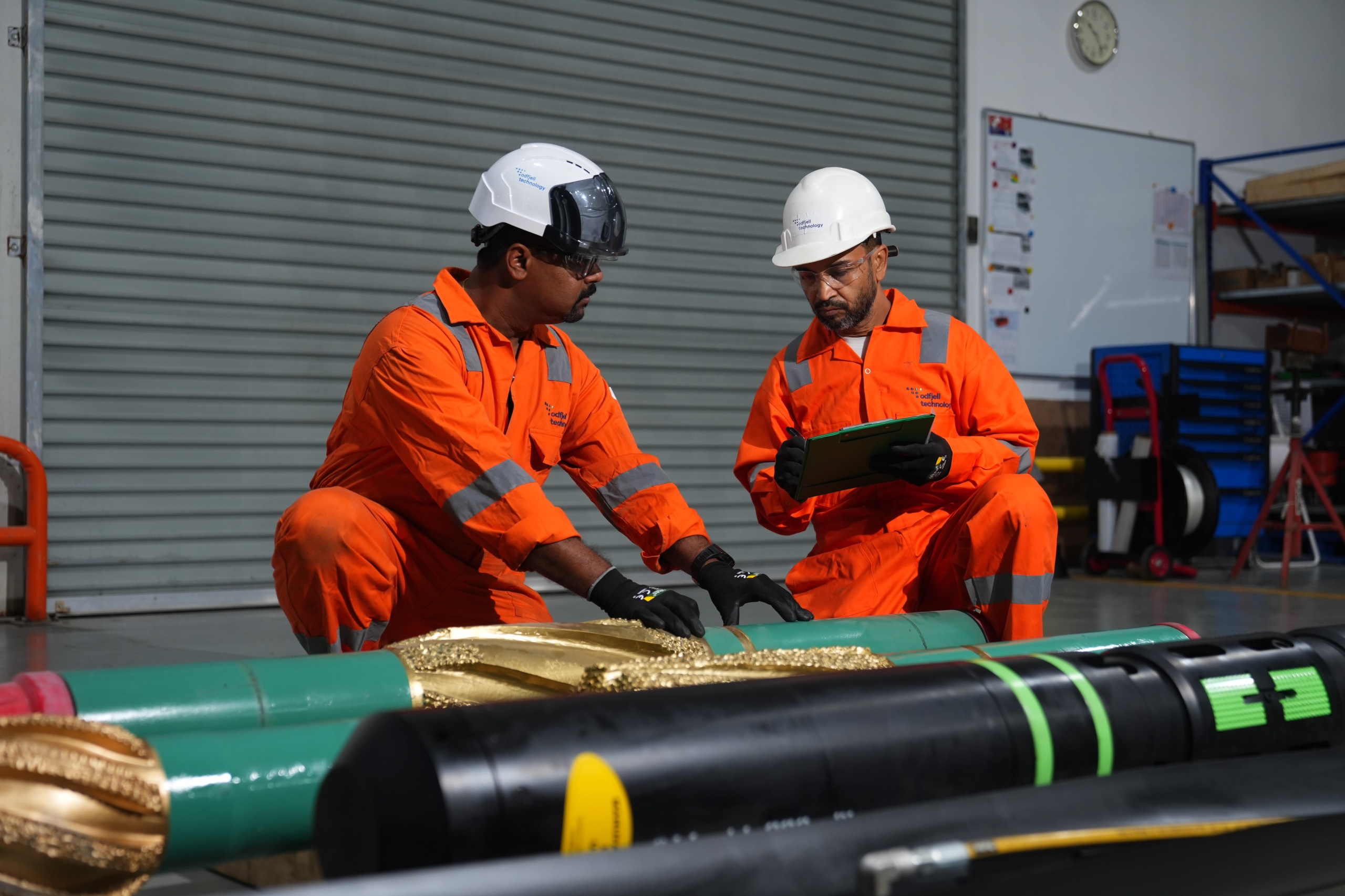
Improved whipstocks, enhanced magnets, next-generation casing scrapers, advanced jetting tools, a complete suite of hands-free and remotely-controlled TRS – this is the equipment that can revolutionise the planning and execution of even the most challenging operations.
Combining the above with a flexible and dedicated support structure, and innovations across delivery – including but not limited to rigless solutions – will multiply the benefits. These proven inhouse capabilities have the power to maximise tool performance and stock control with availability to reduce lead times and service. They also have the geographical reach required to meet customer needs in every market.
Perhaps most importantly, however, the oil and gas landscape depends on people and mindset. At a high level, this translates – at its best – into a partnership approach dedicated to working alongside customers to meet the specific needs of every project element. This is backed by an entrepreneurial, can-do spirit focused on deploying the right solution to achieve the most ideal outcome.
Proven applications
As an example of what is achievable, Odfjell Technology supplied a proprietary RapTr-X asymmetric hydraulic whipstock to a client in the Gulf Cooperation Council (GCC).
The operator was seeking to bring an abandoned inclined well back into production by milling a window in the 9 5/8” casing, creating a rat hole into sandstone with minor shale streaks of limestone formation before eventually drilling an 8 1/2” hole through a high losses-depleted zone.
Successful sidetracking the well at 6,700 feet and despite a history of high-water cuts and challenging geology – eliminated the risk and carbon costs associated with drilling new wells instead of bringing this well back in operation.
Based on the unique design of the whipstock system, the project also avoided the need for additional runs for polish and dress, resulting in reduced emissions and saving the client a total of 24 hours on site.
Beyond immediate operational success, the project illustrates the lifecycle value of targeted intervention. Re-entering and sidetracking an existing well preserved earlier investment while reducing emissions associated with additional rig time, materials and logistics. Eliminating extra runs and trips reduced energy use on site, while maintaining future optionality for recompletion or stimulation as reservoir conditions change over the remaining productive life of the asset.
Winning streak
Well services are equally important. In one example, an operator in Turkmenistan faced a stuck bottom hole assembly (BHA) during drilling operations. The 8 1/2” BHA – along with the collars, pipes and other tools – became lodged in the wellbore and resisted jarring, rotation and chemical treatments.
Solutions were dictated by operational constraints including limited wellbore space due to deviation and geological considerations, the need to avoid excessive force applications, the high cost of non-productive time and the imperative of carbon savings.
Odfjell Technology identified a cut-off operation as the best approach, using a wireline severing tool and a specialised cutter capable of handling the drill pipe cut. Success was delivered through a combination of thorough analysis and planning, regular monitoring of weight on bit and torque, and collaboration across drilling engineers, field personnel and equipment vendors.
Despite the inherent challenges, drilling operations safely resumed without significant delays and with a minimum of non-productive time, contributing to higher efficiencies, increased economy and a lower carbon footprint.
Delivering promise
It is clear that redevelopment and asset maximisation are an increasingly important element in the transition to net zero – posting carbon savings, optimising resources and helping to meet tightening sustainability targets.
From the North Sea to the Middle East, operators are putting fishing, remedials, wellbore cleanup and tubular running to work in the service of the necessary revitalisation of mature fields, delaying the need for new drilling and achieving a practical, measurable step towards a cleaner energy landscape.
Success in these endeavours is built on the ideal combination of equipment, personnel and expertise – which for companies including Odfjell Technology means multi-skilled crews using next-level technologies to deliver in the most challenging of conditions with the greatest level of efficiency and the best possible results.
It is about focused expertise – across equipment, approach and people – to deliver for operators. It is also about meeting the global demand for secure, sustainable and economic energy by leveraging the widest possible range of experience and the broadest mix of contributions.
And, above all else, it is about serving the ongoing transition by squeezing the best out of every asset, and producing reliable supplies while ensuring the lowest possible carbon cost.
As operators pursue IOR and drilling efficiency across mature portfolios, it is increasingly clear that well access, integrity and adaptability delivered through effective remedials and well services form the foundation for production enhancement.
By combining proven equipment with experienced personnel and collaborative execution, operators can unlock additional value from existing wells while managing cost, risk and carbon exposure across the asset lifecycle in redevelopment, re-entry and late-life field operations globally.
Check our editorial feature at Oilfield Technology: